- No products in the cart.

- PPE Apparel
- Chemicals
- Wipes
-
Hand Tools
Hand Tools
-
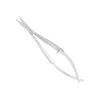 Excelta Scissors - 346B - Micro Self-Opening - Straight - SS - Blade Length .38" - 346B
$35.05
-
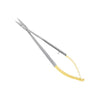 Excelta Scissors - 346-6-HT - Micro Self-Opening - Straight - SS .63" - 346-6-HT
$93.26
-
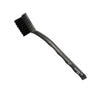 Excelta Brushes - ESD Safe - Offset - Plastic Handle - 197-ESD
$3.50
-
 Hakko CHP PN-20-M Thin, Short Nose Pliers - PN-20-M
$12.77$11.49
-
- Gloves
-
Swabs and Applicators
Foam Tipped Swabs
-
ESD & Static Control
ESD & Static Control
- Pipettes
-
Furnaces and Ovens
Furnaces and ovens


Copper Sulfate Solution, 1.00 M, 500 mL
$40.00
Description
- What it is. This copper sulfate solution contains 1.00 mol of copper(II) sulfate per liter of water and is supplied ready to use in a 500 mL size. It is a clear, deep blue solution prepared to a defined molar concentration for stoichiometry, electrochemistry, and reagent preparation.
- What 1.00 M means. One mole of copper(II) sulfate per liter corresponds to 159.60 g of anhydrous copper sulfate, or 249.69 g of the pentahydrate, in each liter of solution (calculated). Because the concentration is stated in moles rather than percent, it is unaffected by which hydrate was used to make it, so calculations based on copper content are straightforward.
- Why a molar solution. Molar concentration makes stoichiometric work simple: every milliliter contains 1.00 millimole of copper(II) ions. That suits quantitative teaching experiments, preparing exact dilutions such as 0.1 M or 0.5 M, and electrochemistry where the Nernst equation relates cell potential to ion concentration.
- Electrochemistry. A 1 M copper sulfate solution is the standard electrolyte for the copper half-cell in zinc/copper (Daniell-type) galvanic cells, where a copper electrode in copper sulfate and a zinc electrode in zinc sulfate generate a measurable voltage. It also serves for copper electrodeposition and electroplating experiments.
- Displacement and redox reactions. Copper(II) ions are reduced to copper metal by more active metals. Iron, zinc, or magnesium placed in the solution become coated with copper while the blue color fades, a classic single-displacement reaction used to rank metal reactivity.
- Reacting with bases and ammonia. Adding a strong base precipitates pale blue copper(II) hydroxide, and excess ammonia dissolves that precipitate to form the deep blue tetraamminecopper(II) complex. With a defined 1.00 M concentration, these reactions can be run quantitatively in teaching and analytical labs.
- Dilution made easy. Starting from a 1.00 M stock, dilutions follow C1V1 = C2V2: 100 mL diluted to 1 L gives 0.100 M. Using Lab Pro's deionized water for dilution keeps trace ions out of the working solution.
- Handling and environmental care. Copper sulfate is harmful if swallowed, irritates skin and eyes, and is highly toxic to aquatic life with long-lasting effects (H410). Collect all copper-containing solutions and rinses for hazardous waste disposal rather than pouring them down the drain.
Technical Specifications
| Chemical Name | Copper(II) sulfate, aqueous solution |
| Synonyms | Cupric sulfate solution |
| CAS Numbers | 7758-98-7 (copper sulfate) or 7758-99-8 (pentahydrate), per SDS; 7732-18-5 (water) |
| EC Number | 231-847-6 |
| Formula | CuSO4 in water |
| Molar Mass | 159.60 g/mol (anhydrous); 249.69 g/mol (pentahydrate) |
| Concentration | 1.00 M (mol/L) |
| Copper Sulfate Content | 159.60 g/L anhydrous basis (calculated) |
| Appearance | Clear, deep blue liquid |
| Copper(II) Ion Content | 1.00 mmol per mL; about 63.5 g Cu/L (calculated) |
| Equivalent Pentahydrate | 249.69 g CuSO4·5H2O per liter (calculated) |
| Physical State | Liquid, aqueous solution |
| Solvent | Water |
| Exposure Limit | OSHA PEL 1 mg/m³ as Cu (dusts and mists) |
| Hazard Classes (typical) | Acute Tox. 4 (H302); Skin/Eye Irrit. (H315, H319); Aquatic Chronic 1 (H410) |
| Storage | Room temperature, tightly closed, away from bases and reactive metals |
| Package Size | 500 mL |
Applications / Common Uses
- Galvanic cells: Forms the copper half-cell in zinc/copper cell experiments.
- Stoichiometry: Supplies exactly 1.00 mmol copper(II) per mL for quantitative work.
- Standard dilutions: Prepares 0.1 M, 0.5 M, and other working solutions accurately.
- Electrodeposition: Supports copper plating and electrolysis experiments.
- Displacement reactions: Demonstrates the metal reactivity series with iron, zinc, or magnesium.
Storage, Handling & Shipping
Caution: Copper sulfate is harmful if swallowed, irritates skin and eyes, and is highly toxic to aquatic life with long-lasting effects (H410). Wear safety glasses and nitrile gloves and never discharge copper solutions to drains.
Store the solution tightly closed at room temperature, away from strong bases, reducing agents, and reactive metal powders that displace copper. Evaporation raises the concentration, so keep the container closed between uses to preserve the stated molarity.
- Incompatible materials: Strong bases, reducing agents, and finely divided metals (zinc, iron, aluminum, magnesium).
- Exposure limit (copper dusts and mists): OSHA PEL 1 mg/m³ as Cu (TWA).
- Spill response: Absorb with inert material and collect for hazardous waste disposal. Prevent entry to drains and waterways.
- First aid: Eyes or skin: rinse with water for several minutes. Ingestion: rinse mouth and seek medical attention.
- GHS signal word: Warning (typical for copper sulfate solutions: harmful if swallowed; causes skin and eye irritation; highly toxic to aquatic life with long-lasting effects).
Related Categories & Services
- Shop Inorganic Chemicals for related products in this category.
- Explore High Purity Inorganics and ACS Grade Laboratory Chemicals.
- Vendor Managed Inventory (VMI) Program: Lab Pro can stock, track, and replenish this item on site so it never runs out. Contact info@labproinc.com or 888-452-2776 to set up a VMI assessment.
Related Articles
FAQs
How much copper sulfate is in a 1.00 M solution?
Each liter contains 1.00 mole of copper(II) sulfate, equal to 159.60 g of anhydrous copper sulfate or 249.69 g of the pentahydrate. Every milliliter therefore holds 1.00 millimole of copper(II) ions, which makes stoichiometric calculations and dilutions simple to set up. Always confirm against the certificate of analysis.
How do I make 0.1 M copper sulfate from this solution?
Use C1V1 = C2V2. To make 1 liter of 0.100 M solution, measure 100 mL of the 1.00 M stock into a volumetric flask and dilute to the mark with deionized water. Mix thoroughly, label the new solution, and record the dilution in your notebook.
Why is 1 M copper sulfate used in galvanic cells?
A 1 M solution approximates the standard conditions used to tabulate electrode potentials, so zinc/copper cells built with 1 M copper sulfate and 1 M zinc sulfate give a voltage close to the textbook value. That makes the solution ideal for teaching electrochemistry and the Nernst equation.
What is the difference between this and the 10% solution?
The 1.00 M solution is specified by moles per liter, so its copper content is exact regardless of hydrate. The 10% (w/v) solution is specified by weight per volume and is supplied in a larger 1 gallon size. Choose molarity for quantitative work and percent for general use.
How should copper sulfate solutions be disposed of?
Copper is highly toxic to aquatic life, so never pour copper sulfate solutions or rinses down the drain. Collect them in a labeled hazardous waste container and arrange disposal through a licensed contractor in line with local, state, and federal environmental regulations. Include rinse water from glassware in the waste container.
RELATED PRODUCTS


