- No products in the cart.

- PPE Apparel
- Chemicals
- Wipes
-
Hand Tools
Hand Tools
-
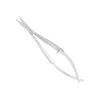 Excelta Scissors - 346B - Micro Self-Opening - Straight - SS - Blade Length .38" - 346B
$35.05
-
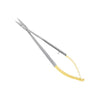 Excelta Scissors - 346-6-HT - Micro Self-Opening - Straight - SS .63" - 346-6-HT
$93.26
-
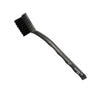 Excelta Brushes - ESD Safe - Offset - Plastic Handle - 197-ESD
$3.50
-
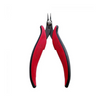 Hakko CHP PN-20-M Thin, Short Nose Pliers - PN-20-M
$12.77$11.49
-
- Gloves
-
Swabs and Applicators
Foam Tipped Swabs
-
ESD & Static Control
ESD & Static Control
- Pipettes
-
Furnaces and Ovens
Furnaces and ovens


Description
- What it is. This deionized water is reagent-grade Type I water with 18 megohm resistivity, available in 1-gallon, 5-gallon, and 55-gallon drum sizes. It is ion-free, high-purity water for preparing reagents, dilutions, standards, and precision rinsing.
- What Type I means. ASTM D1193 defines Type I reagent water as having a resistivity of at least 18 MΩ·cm and a conductivity no higher than 0.056 µS/cm at 25 °C, with limits of 50 µg/L total organic carbon, 1 µg/L sodium, 1 µg/L chloride, and 3 µg/L total silica in the D1193-99 edition.
- Why 18 megohm matters. Resistivity measures how strongly water resists electrical current; it decreases as dissolved ions increase. Water at about 18.2 MΩ·cm at 25 °C contains essentially no dissolved ions, making it suitable for trace analysis, standards, and sensitive instrumentation.
- How it is made. Type I water is produced through deionization and polishing steps, often combined with reverse osmosis, filtration, and organic removal, reducing ions, organics, and particles to trace levels.
- Resistivity falls once opened. Ultrapure water absorbs carbon dioxide from the air within minutes, forming carbonic acid that lowers resistivity well below 18 MΩ·cm. Packaged water serves applications that need ion-free, low-organic water rather than a guaranteed in-use resistivity reading.
- Laboratory uses. Type I water is used to prepare standards and reagents, dilute samples for ICP, IC, and HPLC, make buffers and mobile phases, rinse precision glassware, and supply instruments and analyzers that require high-purity water.
- Deionized versus distilled. Deionization removes dissolved ions through ion exchange, while distillation removes impurities by boiling and condensing. Type I deionized water reaches far lower ionic levels than single distillation.
- Three sizes. The 1 gallon (ZW0006-128) suits benchtop reagent work, the 5 gallon (ZW0006-640) supports daily lab use, and the 55 gallon drum (ZW0006-999) serves production, rinsing, and high-volume users.
- Where it is used. Reagent-grade water is used in analytical, pharmaceutical, environmental, semiconductor, and research labs, wherever water quality affects results. It pairs with every titrant and buffer in Lab Pro's range, from Buffer Solution pH 7, Yellow to Sodium Hydroxide 0.1N/M, 1 Gallon.
Technical Specifications
| Product | Deionized water, reagent grade |
| CAS Number | 7732-18-5 |
| Grade | ACS reagent; ASTM D1193 Type I |
| Resistivity | 18 MΩ·cm (at point of production, 25 °C) |
| Conductivity (Type I limit) | 0.056 µS/cm max at 25 °C |
| Total Organic Carbon (Type I, D1193-99) | 50 µg/L max |
| Sodium (Type I) | 1 µg/L max |
| Chloride (Type I) | 1 µg/L max |
| Total Silica (Type I) | 3 µg/L max |
| Appearance | Clear, colorless, odorless liquid |
| Note | Resistivity decreases after opening as CO2 dissolves |
| Hazard Profile | Not hazardous |
| DOT | Not regulated |
| Package Sizes | 1 gallon; 5 gallon; 55 gallon drum |
Available Variants
- ZW0006-128: 1 gallon for benchtop reagent work.
- ZW0006-640: 5 gallon for daily laboratory use.
- ZW0006-999: 55-gallon drum for production and high-volume rinsing.
Applications / Common Uses
- Standard preparation: Prepares calibration standards and reagents.
- Trace analysis: Dilutes samples for ICP, IC, and HPLC.
- Buffer and mobile phase preparation: Provides ion-free water for buffers.
- Precision rinsing: Rinses glassware and components without residues.
- Instrument supply: Feeds analyzers needing high-purity water.
Storage, Handling & Shipping
Store tightly closed at room temperature, away from chemical fumes and sources of contamination. Open containers only when needed, use clean dispensing equipment, and use opened water promptly, since it absorbs carbon dioxide and contaminants from the air.
- Incompatible materials: None (protect from contamination).
- Personal protection: Standard laboratory gloves to avoid contaminating the water.
- Spill response: Wipe up.
- First aid: Not required under normal use.
Related Categories & Services
- Shop Buffers, Standards & Solutions for related products in this category.
- Explore General Chemistry and ACS Grade Laboratory Chemicals.
- Vendor Managed Inventory (VMI) Program: Lab Pro can stock, track, and replenish this item on site so it never runs out. Contact info@labproinc.com or 888-452-2776 to set up a VMI assessment.
Related Articles
FAQs
What is Type I water?
Type I is the highest grade of reagent water in ASTM D1193. It has a resistivity of at least 18 MΩ·cm and conductivity no higher than 0.056 µS/cm at 25 °C, with strict limits on total organic carbon, sodium, chloride, and silica. It is used for the most sensitive analytical work.
Why does deionized water lose resistivity after opening?
Ultrapure water absorbs carbon dioxide from the air within minutes. The dissolved CO2 forms carbonic acid, which ionizes and lowers resistivity well below 18 MΩ·cm. This is normal; packaged water is for applications that need ion-free, low-organic water rather than guaranteed in-use resistivity. Use it promptly after opening.
What is the difference between deionized and distilled water?
Deionized water has dissolved ions removed by ion exchange, while distilled water is purified by boiling and condensing. Type I deionized water reaches far lower ion levels than single distillation, though distillation also removes many non-ionic impurities. Choose based on your method's water specification. Many labs use both.
What is 18 megohm water used for?
It is used to prepare standards and reagents, dilute samples for ICP, IC, and HPLC, make buffers and mobile phases, rinse precision glassware and components, and feed analyzers that need high-purity water. Any trace ions would affect results; Type I water is the standard choice.
Which size should I choose?
Choose 1 gallon for occasional reagent preparation so water is used soon after opening. Choose 5 gallons for daily lab use, and the 55-gallon drum for production, rinsing, or high-volume users. Use clean dispensing equipment to protect purity in larger sizes. All sizes contain the same water.
RELATED PRODUCTS


