- No products in the cart.

- PPE Apparel
- Chemicals
- Wipes
-
Hand Tools
Hand Tools
-
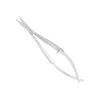 Excelta Scissors - 346B - Micro Self-Opening - Straight - SS - Blade Length .38" - 346B
$35.05
-
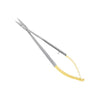 Excelta Scissors - 346-6-HT - Micro Self-Opening - Straight - SS .63" - 346-6-HT
$93.26
-
 Excelta Brushes - ESD Safe - Offset - Plastic Handle - 197-ESD
$3.50
-
 Hakko CHP PN-20-M Thin, Short Nose Pliers - PN-20-M
$12.77$11.49
-
- Gloves
-
Swabs and Applicators
Foam Tipped Swabs
-
ESD & Static Control
ESD & Static Control
- Pipettes
-
Furnaces and Ovens
Furnaces and ovens


Description
- What it is. This starch indicator is a 1% aqueous starch solution, supplied in a 1 gallon size. It is the standard endpoint indicator for iodometric and iodimetric titrations, forming an intense blue-black color with iodine.
- How it works. The amylose fraction of starch forms a helical structure that traps triiodide ions, producing a deep blue-black complex visible at extremely low iodine concentrations. When the last iodine is reduced by thiosulfate, the color disappears sharply, marking the endpoint.
- When to add it. In iodometric titrations, add starch near the endpoint, when the yellow iodine color has faded to pale straw. Adding it too early, at high iodine concentration, can bind iodine tightly and slow its release, blurring the endpoint.
- Iodimetric titrations. In iodimetry, where standard iodine is the titrant, starch is added at the start, and the endpoint is the first permanent blue color. Ascorbic acid, sulfite, and arsenite are classic analytes for this approach.
- Sensitivity. Starch makes iodine visible at concentrations far below what its yellow color alone reveals, which is why it improves accuracy in dilute titrations such as residual chlorine and dissolved oxygen.
- Ready-made convenience. Preparing starch indicator requires dispersing soluble starch in boiling water and cooling it, and homemade solutions spoil quickly. A ready-made 1% solution saves preparation time and gives consistent sensitivity.
- Stability. Starch solutions support microbial growth and slowly lose sensitivity. Keep the container closed, avoid contamination, and replace solution that becomes moldy, cloudy, or gives a reddish or brown color instead of blue.
- The iodometric system. Use starch with Lab Pro's Sodium Thiosulfate 0.1 N Solution, 1 Gallon and Potassium Iodide 10% (w/v) Solution, 1 Quart for complete iodometric determinations.
- Alternative endpoint detection. For colored or turbid samples where the starch color is hard to see, potentiometric endpoint detection with a platinum electrode offers an alternative. Starch remains the simplest and most widely used visual indicator.
- Where it is used. Starch indicator is used in water and wastewater testing for chlorine and dissolved oxygen, in food labs for peroxide value and vitamin C, in bleach and disinfectant QC, and in teaching labs demonstrating redox titrations.
Technical Specifications
| Product | Starch indicator solution |
| Concentration | 1% starch |
| Active Component | Soluble starch (amylose forms the iodine complex) |
| CAS Numbers | 9005-84-9 (soluble starch); 7732-18-5 (water). |
| Endpoint Color | Blue-black with iodine; colorless when iodine is consumed |
| When to Add (iodometry) | Near the endpoint (pale yellow stage) |
| When to Add (iodimetry) | At the start of the titration |
| Typical Dose | About 1 to 2 mL per titration |
| Appearance | Colorless to slightly opalescent liquid |
| Stability Note | Supports microbial growth; replace if cloudy or moldy |
| Package Size | 1 gallon |
Applications / Common Uses
- Iodometric endpoints: Signals iodine consumption in thiosulfate titrations.
- Iodimetric titrations: Shows the first excess of standard iodine.
- Chlorine and oxygen testing: Improves endpoint detection in dilute samples.
- Vitamin C analysis: Indicates iodimetric ascorbic acid titrations.
- Teaching labs: Demonstrates the starch-iodine reaction.
Storage, Handling & Shipping
Store tightly closed at room temperature or as directed on the label, away from contamination. Starch solutions can support microbial growth, so dispense with clean tools and replace solution that becomes cloudy, moldy, or gives a weak or reddish color with iodine.
- Incompatible materials: Strong oxidizers.
- Personal protection: Standard laboratory gloves and eye protection.
- Spill response: Wipe up and rinse the area with water.
- First aid: Eyes: rinse with water if irritation occurs.
Related Categories & Services
- Shop Buffers, Standards & Solutions for related products in this category.
- Explore General Chemistry and ACS Grade Laboratory Chemicals.
- Vendor Managed Inventory (VMI) Program: Lab Pro can stock, track, and replenish this item on site so it never runs out. Contact info@labproinc.com or 888-452-2776 to set up a VMI assessment.
Related Articles
FAQs
Why does starch turn blue-black with iodine?
The amylose in starch coils into a helix that traps triiodide ions inside, forming a complex that absorbs light strongly and appears deep blue-black. The reaction is highly sensitive, so even small amounts of iodine produce a clear color, which makes starch an excellent endpoint indicator.
When should starch be added in an iodometric titration?
Add it near the endpoint, when the iodine color has faded to pale yellow. At high iodine concentrations, starch binds iodine strongly and releases it slowly, which blurs the endpoint. Adding it late keeps the color change sharp and the titration accurate. Swirl well after adding.
How long does starch indicator solution last?
Starch solutions can support microbial growth and gradually lose sensitivity. Keep the container closed, dispense with clean tools, and replace solution that becomes cloudy, moldy, or gives a weak or reddish color with iodine. Many labs date opened containers and replace them on a schedule.
How much starch indicator should I use?
About 1 to 2 mL of 1% starch solution per titration is typical. Use the same amount for all samples, standards, and blanks so endpoints are consistent. Too much starch can make the color change harder to judge and add a small blank error. Record the amount.
What is the difference between iodometry and iodimetry?
In iodometry, an oxidant releases iodine from iodide and the iodine is titrated with thiosulfate; starch is added near the end. In iodimetry, standard iodine is the titrant, reacting directly with a reducing analyte; starch is added at the start and the first lasting blue marks the endpoint.
RELATED PRODUCTS


