- No products in the cart.

- PPE Apparel
- Chemicals
- Wipes
-
Hand Tools
Hand Tools
-
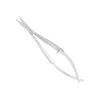 Excelta Scissors - 346B - Micro Self-Opening - Straight - SS - Blade Length .38" - 346B
$35.05
-
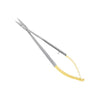 Excelta Scissors - 346-6-HT - Micro Self-Opening - Straight - SS .63" - 346-6-HT
$93.26
-
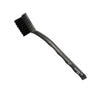 Excelta Brushes - ESD Safe - Offset - Plastic Handle - 197-ESD
$3.50
-
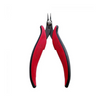 Hakko CHP PN-20-M Thin, Short Nose Pliers - PN-20-M
$12.77$11.49
-
- Gloves
-
Swabs and Applicators
Foam Tipped Swabs
-
ESD & Static Control
ESD & Static Control
- Pipettes
-
Furnaces and Ovens
Furnaces and ovens


Description
- What it is. Sol-M® eccentric tip syringes in two larger sizes, 20 mL and 60 mL, supplied without needles. On an eccentric tip syringe, the tip sits off-center near the edge of the barrel rather than in the middle. That offset lets the attached needle or fitting sit closer to the surface, which supports shallow-angle access.
- Why larger eccentric syringes. Larger barrels hold the tip even farther from the surface when centered, so the offset matters more as the syringe grows. A 20 mL or 60 mL syringe with an eccentric tip keeps the connection low and visible, which helps when drawing or aspirating larger volumes through a needle held at a low angle.
- 3-piece features. Sol-Millennium includes its eccentric syringes in its 3-piece range, featuring a high-transparency barrel for clear visibility, silicone lubrication for smooth plunger movement, a plunger backstop to prevent accidental withdrawal, and large finger grips for control. The clear barrel helps when monitoring a large-volume draw as it fills.
- Choosing between sizes. The 20 mL size suits moderate-volume draws, while the 60 mL handles large-volume aspiration and transfers. Sol-Millennium also makes a 10 mL eccentric tip syringe for smaller volumes. Stocking all three sizes lets a facility keep one eccentric-tip style across procedures and choose the right capacity for each task, rather than switching tip designs as volume changes.
Recommended For
- Large-volume aspiration: offset tip keeps the needle low at higher volumes
- Low-angle access: the needle sits closer to parallel with the surface
- Blood and fluid draws: where protocols favor an offset tip
- Improved line of sight: the off-center tip leaves the needle more visible
- Bulk transfers: the 60 mL size reduces refills
Product Details
- Manufacturer: Sol-Millennium Medical, Inc.
- Product Line: Sol-M® 3-Piece Syringe without Needle, Eccentric Tip
- Volumes in This Group: 20 mL, 60 mL
- Tip Position: Eccentric (offset from barrel center)
- Needle: Not included
- Construction: 3-piece syringe
- Barrel: High-transparency
- Plunger: Silicone-lubricated, with plunger backstop
- Finger Grips: Large, for easy, controlled handling
Available Variants
- P180020ET: 20 mL eccentric tip syringe
- P180060ET: 60 mL eccentric tip syringe
Both share the same off-center tip and 3-piece features; they differ only in capacity.
FAQs
When does an eccentric tip make the biggest difference?
On larger syringes. A centered tip on a wide 60 mL barrel holds the needle far from the surface, forcing a steep angle. Offsetting the tip lowers the needle, making a low-angle approach easier even with a large barrel. On small syringes, the effect is less noticeable.
Can I use an eccentric tip syringe for injections?
An eccentric tip accepts standard needles, so you can use it wherever its labeling and your protocol allow. In practice, people most often choose these syringes for draws and aspiration, where a low angle helps. For routine injections, a standard centered tip is more common. Check the labeling for intended use.
Is a 60 mL eccentric syringe hard to control?
Large syringes need more force to move the plunger, especially with fine needles or viscous fluids. Use both hands when needed, push or pull steadily, and choose a wider needle gauge for thick fluids. Large finger grips improve stability during large-volume work. Two hands give the most control.
How should eccentric syringes be stored with other syringes?
Keep them in separately labeled bins. Eccentric and centered tips look similar at a glance, and mixing them up can complicate procedures that depend on tip position. Clear labeling by size and tip type speeds picking and prevents substitution errors. Label by size and tip type.
Do eccentric tip syringes fit standard needles?
They are designed for Luer-type needles and fittings, but the sources reviewed do not state whether these SKUs use a slip or lock connection. Check the product labeling, especially before connecting filters or tubing that may need a threaded connection. A threaded tip matters most under pressure or when connecting to tubing.
RELATED PRODUCTS


