- No products in the cart.

- PPE Apparel
- Chemicals
- Wipes
-
Hand Tools
Hand Tools
-
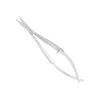 Excelta Scissors - 346B - Micro Self-Opening - Straight - SS - Blade Length .38" - 346B
$35.05
-
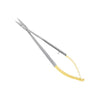 Excelta Scissors - 346-6-HT - Micro Self-Opening - Straight - SS .63" - 346-6-HT
$93.26
-
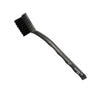 Excelta Brushes - ESD Safe - Offset - Plastic Handle - 197-ESD
$3.50
-
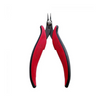 Hakko CHP PN-20-M Thin, Short Nose Pliers - PN-20-M
$12.77$11.49
-
- Gloves
-
Swabs and Applicators
Foam Tipped Swabs
-
ESD & Static Control
ESD & Static Control
- Pipettes
-
Furnaces and Ovens
Furnaces and ovens


Description
- What it is. The Sol-M® 60 mL catheter tip syringe is a large-volume, 3-piece syringe with a long, tapered tip instead of a standard Luer connection. The tapered nozzle fits directly into catheters and tubing, which is why this syringe style is used for flushing, irrigation, and large-volume transfers. It is the only catheter tip syringe in the Sol-M 3-piece range.
- Why a catheter tip. A Luer tip is sized for needles and small fittings. A 60 mL catheter-tip syringe is built for higher-volume work where the syringe connects to a wider opening, such as a catheter port. Its 60 mL capacity means fewer refills during a procedure, and its shape makes it a common choice for irrigation in clinical settings.
- Built for control. It shares the Sol-M 3-piece design: a high-transparency barrel for a clear view of large volumes, silicone lubrication for smooth plunger movement, a plunger backstop that prevents the plunger from being pulled out of the barrel, and large finger grips that help with control when pushing or drawing a full 60 mL.
- Packing. Sol-Millennium packs this 60 cc catheter tip syringe 30 per box and 240 per case, matching the pack count of its 60 mL Luer Lock syringe. Those smaller box counts reflect the larger barrel size and keep boxes easy to handle in supply rooms. Because the tip is tapered rather than threaded, it seats by pressing into the opening, so connections are quick to make and remove between steps of a procedure.
Recommended For
- Catheter flushing and irrigation: the tapered tip fits catheter ports directly
- Wound and cavity irrigation: large volume with steady, controlled pressure
- Large-volume transfers: 60 mL capacity reduces refills
- Feeding and drainage tasks: where the device or protocol calls for a catheter tip connection
- Laboratory bulk liquid handling: measured large-volume transfers
Product Details
- Manufacturer: Sol-Millennium Medical, Inc.
- Product Line: Sol-M® Catheter Tip Syringe without Needle
- Volume: 60 mL
- Tip Type: Catheter tip (tapered)
- Needle: Not included
- Construction: 3-piece syringe
- Barrel: High-transparency
- Plunger: Silicone-lubricated, with plunger backstop
- Finger Grips: Large, for easy, controlled handling
- Box / Case Quantity: 30 per box / 240 per case
FAQs
Can I attach a needle to a catheter tip syringe?
Not directly. The tapered catheter tip is wider than a Luer connection and is not designed to accept standard needles. If a procedure requires a needle or Luer fitting, use a Luer Lock or Luer Slip syringe, or an adapter specifically designed for that purpose. Never force a needle onto it.
Is a catheter tip syringe suitable for enteral feeding?
Catheter tip syringes have traditionally been used with some feeding tubes, but many facilities now use ENFit or other dedicated enteral connectors to prevent misconnections. Check which connector your feeding system uses and follow your facility's policy before using any syringe for enteral feeding. Misconnections can be dangerous.
How do I avoid splashing during irrigation?
Seat the tip firmly in the port or catheter, push the plunger slowly and steadily, and keep the syringe aligned with the opening. Large volumes under quick pressure can splash or backflow. Wear appropriate personal protective equipment during irrigation, as your facility requires. Slower pressure also improves comfort.
Can a catheter tip syringe be refilled during a procedure?
Within a single procedure for one patient, many facilities allow refilling the same syringe during irrigation, provided the tip stays clean and is not set down on a nonsterile surface. Never use the same syringe between patients. Follow your facility's infection-control policy on refilling and discarding irrigation syringes.
Why use a 60 mL syringe instead of a smaller one?
For irrigation and flushing, larger volumes mean fewer refills and fewer disconnections, reducing contamination risk and saving time. For precise small-volume measurement, a smaller syringe with finer graduations is more accurate. Choose the size that matches the procedure volume. Match the syringe to the task volume.
RELATED PRODUCTS


