- No products in the cart.

- PPE Apparel
- Chemicals
- Wipes
-
Hand Tools
Hand Tools
-
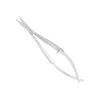 Excelta Scissors - 346B - Micro Self-Opening - Straight - SS - Blade Length .38" - 346B
$35.05
-
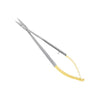 Excelta Scissors - 346-6-HT - Micro Self-Opening - Straight - SS .63" - 346-6-HT
$93.26
-
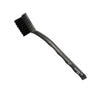 Excelta Brushes - ESD Safe - Offset - Plastic Handle - 197-ESD
$3.50
-
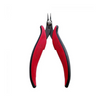 Hakko CHP PN-20-M Thin, Short Nose Pliers - PN-20-M
$12.77$11.49
-
- Gloves
-
Swabs and Applicators
Foam Tipped Swabs
-
ESD & Static Control
ESD & Static Control
- Pipettes
-
Furnaces and Ovens
Furnaces and ovens


Description
- What it is. A Sol-M® 10 mL eccentric-tip syringe without a needle. Instead of sitting in the center of the barrel, the tip is offset toward one side. That off-center position is why you choose an eccentric syringe: it lets the attached needle or fitting sit closer to the surface you're working on.
- Why an off-center tip helps. With a centered tip, the barrel holds the needle away from the skin or work surface, which forces a steeper angle. An eccentric tip syringe brings the needle closer to parallel with the surface, which is often preferred for shallow-angle work such as drawing from a vein or aspirating near the surface. It also gives a clearer line of sight to the tip.
- 3-piece features. Sol-Millennium includes its eccentric-tip syringes in its 3-piece syringe range, which features a high-transparency barrel, silicone lubrication for smooth plunger movement, a plunger backstop to prevent accidental withdrawal, and large finger grips for controlled handling. The 10 mL capacity covers mid-volume draws and transfers. A clear barrel also helps confirm the draw as it happens.
- Where it fits in the range. The 10 mL size is the smallest eccentric-tip syringe Sol-Millennium lists, designed for routine draws and mid-volume transfers. For larger volumes, the same off-center design is available in 20 mL and 60 mL sizes, so a facility can standardize on one eccentric tip style across procedures while choosing the capacity per task.
Recommended For
- Shallow-angle procedures: the offset tip lets the needle sit closer to the skin surface
- Venous blood draws: eccentric tips are commonly chosen for low-angle venipuncture
- Aspiration near the surface: better access when the needle must stay nearly parallel
- Improved tip visibility: the off-center tip leaves a clearer line of sight
- Mid-volume transfers: 10 mL capacity for routine draws
Product Details
- Manufacturer: Sol-Millennium Medical, Inc.
- Product Line: Sol-M® 3-Piece Syringe without Needle, Eccentric Tip
- Volume: 10 mL
- Tip Position: Eccentric (offset from barrel center)
- Needle: Not included
- Construction: 3-piece syringe
- Barrel: High-transparency
- Plunger: Silicone-lubricated, with plunger backstop
- Finger Grips: Large, for easy, controlled handling
FAQs
What is the main advantage of an eccentric tip?
The offset tip lets the needle run closer to the skin or work surface. This supports the shallow insertion angle many venipuncture and aspiration techniques require and gives the user a better view of the needle tip. A centered tip holds the needle further from the surface.
Is an eccentric tip syringe Luer Slip or Luer Lock?
The sources reviewed list this SKU as an eccentric-tip syringe but don't state its connection style. Most eccentric tip syringes on the market use a slip connection. Confirm the tip connection on the product label before pairing it with filters or pressurized transfers that need a threaded lock.
Should I hold an eccentric syringe a particular way?
Generally, yes. For low-angle work, orient the syringe so the offset tip is closest to the skin, with the needle bevel facing up. Holding it the other way around cancels out the benefit. Follow your facility's procedure for specific techniques like venipuncture. Practice orientation before live use.
How does an eccentric tip syringe compare with a catheter tip?
They solve different problems. An eccentric tip is an offset Luer-style tip for needles, designed for low-angle access. A catheter tip is a long, tapered nozzle designed to fit catheters and tubing for irrigation or feeding. They are not interchangeable, so select by connection. Store them in separate bins.
Can I use this syringe for oral medication?
Not as a substitute for an oral syringe. Oral syringes use a non-Luer tip that cannot connect to IV lines, a safeguard against wrong-route errors. An eccentric tip syringe accepts standard needles, so it lacks that protection. Use dedicated oral syringes for medications given by mouth. Wrong-route errors can be serious.
RELATED PRODUCTS


