- No products in the cart.

- PPE Apparel
- Chemicals
- Wipes
-
Hand Tools
Hand Tools
-
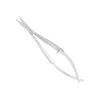 Excelta Scissors - 346B - Micro Self-Opening - Straight - SS - Blade Length .38" - 346B
$35.05
-
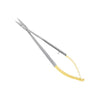 Excelta Scissors - 346-6-HT - Micro Self-Opening - Straight - SS .63" - 346-6-HT
$93.26
-
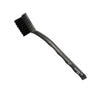 Excelta Brushes - ESD Safe - Offset - Plastic Handle - 197-ESD
$3.50
-
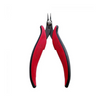 Hakko CHP PN-20-M Thin, Short Nose Pliers - PN-20-M
$12.77$11.49
-
- Gloves
-
Swabs and Applicators
Foam Tipped Swabs
-
ESD & Static Control
ESD & Static Control
- Pipettes
-
Furnaces and Ovens
Furnaces and ovens


Description
- What it is. These Sol-M® insulin syringes pair a full 1 mL, U-100 barrel with the finest needle in the Sol-M standard range: a 31 gauge needle in either 6 mm (15/64") or 8 mm (5/16") length. They are built for people and care teams who draw larger insulin doses but still want a thin, short needle for subcutaneous injection. Both lengths share the same barrel, markings, and packaging, so switching between them changes only the needle.
- Why 31 gauge and a short needle. A 31-gauge insulin syringe has a thinner cannula than 27G to 30G options, and Sol-Millennium uses a thin-wall design to improve insulin flow and shorten injection time. The needle is tri-bevel, anti-coring, and silicone-oil lubricated for a smoother entry. Choose the 6mm insulin syringe or the 8 mm, 5/16 insulin syringe based on your clinician's recommended injection technique.
- Clear dosing on a 1 mL barrel. Bold, easy-to-read unit markings support accurate dosing of U-100 insulin, and a large flange provides a secure grip when you push the plunger. Distributor specifications also list a low-dead-space design, which reduces the insulin left behind in the syringe after each injection. The 1 mL barrel holds up to 100 units, so you can give larger doses in a single injection.
- Packed sterile for daily use. Each syringe has its needle permanently fixed and is sterile and single-use. They come in polyethylene bags of 10, 100 syringes per box and 1,000 per case, a format suited to both pharmacy retail and clinic stocking. The syringes are for U-100 insulin only. Bags of 10 also make it easy to dispense a measured supply without breaking open a full box.
Recommended For
- Larger insulin doses: the 1 mL barrel holds up to 100 units of U-100 insulin
- Fine-needle preference: the 31 gauge needle is the thinnest in the Sol-M standard range
- Short-needle injection technique: 6 mm and 8 mm lengths for subcutaneous injection
- Pharmacy and retail diabetes supply: PE bags of 10-unit sets for dispensing in smaller counts
- Clinics and care facilities: boxes of 100 and cases of 1,000 for steady stocking
Product Details
- Manufacturer: Sol-Millennium Medical, Inc.
- Product Line: Sol-M® Standard Insulin Syringe
- Syringe Volume: 1 mL (100 units of U-100 insulin)
- Needle Gauge: 31G
- Needle Lengths in This Group: 6 mm (15/64") and 8 mm (5/16")
- Needle Attachment: Fixed (permanently attached) needle
- Needle Design: Tri-bevel, anti-coring, silicone-oil lubricated; thin-wall cannula
- Markings: Bold, easy-to-read U-100 insulin unit markings
- Flange: Large flange for a secure grip
- Dead Space: Low dead space (distributor specification)
- Syringe / Needle Material: Polypropylene syringe; stainless steel needle (distributor specification)
- Insulin Compatibility: U-100 insulin only
- Sterility: Sterile
- Use: Single use
- Packaging: PE bag of 10; 100 per box; 1,000 per case
Available Variants
- 161311564B: 1 mL insulin syringe, 31G x 6 mm (15/64")
- 1613151B: 1 mL insulin syringe, 31G x 8 mm (5/16")
Both syringes share the same 1 mL U-100 barrel, 31 gauge needle, and packaging. The only difference is needle length: 6 mm or 8 mm.
FAQs
Should I choose the 6 mm or the 8 mm needle?
Follow your clinician's guidance on needle length. Current diabetes injection guidance generally favors shorter needles for most adults because they reduce the chance of injecting into muscle. Some people with more subcutaneous tissue, or who have been trained on 8 mm, may prefer the longer option.
Why use a 1 mL syringe if my dose is small?
You generally should not. For doses under 30 units, a 0.3 mL syringe has more widely spaced markings that are easier to read accurately, and under 50 units, a 0.5 mL syringe does the same. Use the 1 mL size when your typical dose is above 50 units.
Does a 31 gauge needle hurt less?
Many users find thinner needles more comfortable, and 31G is among the finest insulin syringe needles available. Comfort also depends on injection technique, needle length, site rotation, and using a fresh needle every time, since tri-bevel tips are designed for a single, sharp entry rather than repeated use.
Can these syringes be used with U-200 or U-500 insulin?
No. These syringes are marked for U-100 insulin only. Using them with a more concentrated insulin would make the unit markings wrong and could cause a serious dosing error. Concentrated insulins require the specific device or syringe their labeling specifies, so always check the insulin label first. When in doubt, ask your pharmacist.
How should you dispose of used insulin syringes at home?
Place each used syringe, needle attached, into an FDA-cleared sharps container or a heavy-duty plastic container with a tight lid, as local rules allow. Never throw loose syringes in household trash or recycling. Many communities offer drop-off sites or mail-back programs for full containers. Keep containers out of reach of children.
RELATED PRODUCTS


