- No products in the cart.

- PPE Apparel
- Chemicals
- Wipes
-
Hand Tools
Hand Tools
-
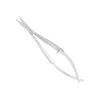 Excelta Scissors - 346B - Micro Self-Opening - Straight - SS - Blade Length .38" - 346B
$35.05
-
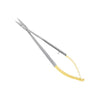 Excelta Scissors - 346-6-HT - Micro Self-Opening - Straight - SS .63" - 346-6-HT
$93.26
-
 Excelta Brushes - ESD Safe - Offset - Plastic Handle - 197-ESD
$3.50
-
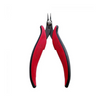 Hakko CHP PN-20-M Thin, Short Nose Pliers - PN-20-M
$12.77$11.49
-
- Gloves
-
Swabs and Applicators
Foam Tipped Swabs
-
ESD & Static Control
ESD & Static Control
- Pipettes
-
Furnaces and Ovens
Furnaces and ovens


Description
- What it is. The Sol-M® TB syringe is a 1 mL tuberculin syringe with a fixed 27 gauge, 1/2" needle. Tuberculin syringes are built for small, precise doses, and distributor information for this product describes 0.01 mL graduations, the fine scale that makes a 1 mL TB syringe the standard tool for tuberculin skin testing and other small-volume injections.
- Why a fixed fine needle. The 27-gauge, 1/2" needle is permanently attached, so there is no hub connection to loosen and less space for medication to collect. Distributor listings describe an ultra-low dead-space design, and Sol-Millennium describes the line as using low-dead-space technology to reduce medication waste, improve dosing accuracy, and get more doses from each vial.
- Visibility and control. A high-transparency barrel makes very small volumes easy to see, silicone lubrication keeps plunger travel smooth for slow, controlled delivery, a plunger backstop prevents accidental withdrawal, and large finger grips support a steady hand. These details matter at 1 mL, where a small reading error is a large share of the dose.
- Materials and packaging. Distributor information for this Sol-M TB syringe line lists it as DEHP-free, PVC-free, not made with natural rubber latex, sterile, single-use, and sterilized with ethylene oxide. It ships 100 per box and 800 per case. Because the needle is fixed, each unit is ready to fill straight from the box, with no assembly step between patients during a testing clinic.
Recommended For
- Tuberculin skin testing: fine graduations and a short, fine needle for intradermal placement
- Small-volume injections: 1 mL capacity with 0.01 mL graduations
- Vaccine programs: low dead space helps get more doses per vial
- Pediatric medication doses: precise measurement of fractions of a milliliter
- Latex-sensitive settings: not made with natural rubber latex
Product Details
- Manufacturer: Sol-Millennium Medical, Inc.
- Product Line: Sol-M® TB Syringe with Fixed Needle
- Syringe Volume: 1 mL
- Graduations: 0.01 mL (distributor specification)
- Needle: Fixed, 27G x 1/2"
- Dead Space: Low (ultra-low) dead space
- Barrel: High-transparency
- Plunger: Silicone-lubricated, with plunger backstop
- Finger Grips: Large and stable
- Materials: DEHP-free, PVC-free, not made with natural rubber latex (distributor specification)
- Sterilization: Ethylene oxide; sterile, single-use (distributor specification)
- Box / Case Quantity: 100 per box / 800 per case
FAQs
What makes a syringe a "tuberculin" syringe?
A tuberculin syringe is a 1 mL syringe with very fine graduations, typically in hundredths of a milliliter, designed to measure the small doses used in tuberculin skin testing. Its precision also makes it useful for other small-volume injections, such as some vaccines, allergen doses, and pediatric medications.
Is 27G x 1/2" right for a tuberculin skin test?
Tuberculin skin tests are given intradermally, just under the skin surface, so they require a short, fine needle. A 27-gauge, 1/2" needle is a common choice for this. Follow current CDC guidance and your facility's protocol on technique, angle, and reading the result. Read results within the window your protocol sets.
Can a TB syringe be used to give insulin?
No. TB syringes are graduated in milliliters, while insulin syringes are marked in insulin units for a specific concentration. Using a TB syringe for insulin invites conversion errors and dangerous dosing mistakes. Always use an insulin syringe that matches the insulin concentration being given. Keep TB and insulin syringes in separate bins.
Why does a fixed needle help with low dead space?
A detachable needle has a hub that sits on the syringe tip, and fluid collects in that connection. With a permanently fixed needle, there is no separate hub, so less medication is left behind after the plunger is fully depressed. That is one reason TB syringes often use fixed needles.
How do I read a 0.1 mL dose accurately?
Hold the syringe at eye level, expel any air bubbles, and align the plunger stopper's leading edge (the edge closest to the needle) with the 0.1 mL mark. Fine graduations make this easier on a 1 mL barrel, but take a second look before injecting. A second check catches most errors.
RELATED PRODUCTS


