- No products in the cart.

- PPE Apparel
- Chemicals
- Wipes
-
Hand Tools
Hand Tools
-
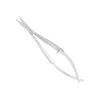 Excelta Scissors - 346B - Micro Self-Opening - Straight - SS - Blade Length .38" - 346B
$35.05
-
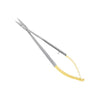 Excelta Scissors - 346-6-HT - Micro Self-Opening - Straight - SS .63" - 346-6-HT
$93.26
-
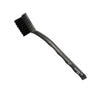 Excelta Brushes - ESD Safe - Offset - Plastic Handle - 197-ESD
$3.50
-
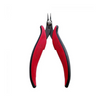 Hakko CHP PN-20-M Thin, Short Nose Pliers - PN-20-M
$12.77$11.49
-
- Gloves
-
Swabs and Applicators
Foam Tipped Swabs
-
ESD & Static Control
ESD & Static Control
- Pipettes
-
Furnaces and Ovens
Furnaces and ovens


Description
- What it is. The Sol-M® 1 mL Luer Lock syringe is a 3-piece syringe without a needle in the smallest standard size Sol-Millennium makes. A 1ml syringe offers the finest graduation spacing, making it the natural choice for small, precise volumes, and the threaded Luer Lock tip lets you choose the exact needle each task needs.
- Why a separate needle. Buying a 1ml syringe without a needle keeps your options open. You can draw up through a blunt fill or filter needle, then switch to a fine injection needle, or connect to a filter or cap. The Luer Lock threads hold each connection firmly so it does not slip off mid-task.
- Sol-M 3-piece features. A high-transparency barrel lets you see small volumes clearly, silicone lubrication keeps plunger travel smooth, a plunger backstop prevents accidental withdrawal, and large finger grips improve control. Sol-Millennium designs its 3-piece syringes to accurately measure liquid medications for clinical needs. Those features matter most at small volumes, where a small reading error is a large share of the dose.
- Packing. The syringe ships 100 per box and 800 per case. For applications where retained medication must be minimized, Sol-Millennium also offers a low-dead-space version of this 1 mL Luer Lock syringe. Keeping both versions in stock lets a facility reserve the low dead space syringe for vaccines and costly drugs, while using this standard 1 mL syringe for routine measuring, transfers, and small-volume injections.
Recommended For
- Small-volume medication doses: fine graduation spacing on the 1 mL barrel
- Vaccines and injectables: pair with the needle gauge and length required
- Drawing up and administering: switch from a fill needle to an injection needle
- Laboratory micro-volume transfers: measured transfers with a secure tip
- Filtering small volumes: Luer Lock holds a syringe filter securely
Product Details
- Manufacturer: Sol-Millennium Medical, Inc.
- Product Line: Sol-M® 3-Piece Syringe without Needle, Luer Lock
- Volume: 1 mL
- Tip Type: Luer Lock
- Needle: Not included
- Construction: 3-piece syringe
- Barrel: High-transparency
- Plunger: Silicone-lubricated, with plunger backstop
- Finger Grips: Large, for easy, controlled handling
- Box / Case Quantity: 100 per box / 800 per case
FAQs
How precise is a 1 mL syringe?
A 1 mL syringe has the finest graduations of any standard size, typically in hundredths of a milliliter, which makes it the best choice for doses under 1 mL. Read the dose at eye level from the plunger edge closest to the tip, expel air bubbles, then confirm.
Is this the same as an insulin syringe?
No. Insulin syringes are marked in insulin units, usually come with a fixed needle, and are labeled for a specific insulin concentration. This syringe is graduated in milliliters, has a Luer Lock tip, and no needle. Never use a milliliter syringe to measure insulin units. Unit and milliliter scales are not interchangeable.
What is the difference between this and the low dead space version?
Both are 1 mL Luer Lock syringes. The low dead space version leaves less fluid behind after injection, which helps you get extra doses from multi-dose vials. For general measuring and transfers, the standard version is sufficient. Reserve LDS syringes for costly drugs.
Can a 1 mL Luer Lock syringe be used with a syringe filter?
Yes. The threaded tip holds Luer Lock syringe filters securely. Be aware that pushing through a membrane from a small syringe takes more force, and back pressure can be higher. Choose a filter size suited to small volumes, and push slowly and steadily. Swap filters if resistance builds.
What needle should I pair with a 1 mL syringe?
It depends on the injection route and medication. Intradermal and subcutaneous injections usually use fine, short needles, while intramuscular injections need longer ones. Follow the medication labeling and your facility's protocols for gauge and length. Many facilities stock several needle sizes to cover common injection routes and patient sizes.
RELATED PRODUCTS


