- No products in the cart.

- PPE Apparel
- Chemicals
- Wipes
-
Hand Tools
Hand Tools
-
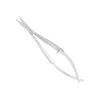 Excelta Scissors - 346B - Micro Self-Opening - Straight - SS - Blade Length .38" - 346B
$35.05
-
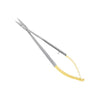 Excelta Scissors - 346-6-HT - Micro Self-Opening - Straight - SS .63" - 346-6-HT
$93.26
-
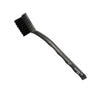 Excelta Brushes - ESD Safe - Offset - Plastic Handle - 197-ESD
$3.50
-
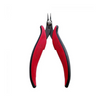 Hakko CHP PN-20-M Thin, Short Nose Pliers - PN-20-M
$12.77$11.49
-
- Gloves
-
Swabs and Applicators
Foam Tipped Swabs
-
ESD & Static Control
ESD & Static Control
- Pipettes
-
Furnaces and Ovens
Furnaces and ovens


Description
- What it is. The Sol-M® 1 mL low dead space syringe is a 3-piece Luer Lock syringe without a needle, designed to leave less medication behind after each injection. Dead space is the small volume trapped in the syringe tip and needle hub once the plunger is fully pressed; reducing it means more of every vial actually reaches patients.
- Why low dead space matters. Sol-Millennium explains that its LDS syringes can increase the number of doses drawn from a multi-dose vial. That became especially significant during the COVID-19 vaccination campaign, when an extra dose per vial stretched limited supply. Sol-Millennium also notes that switching to low-dead-space syringes requires no change to clinical practice.
- Secure, precise, 1 mL. The 1 mL barrel suits vaccines, small-volume medications, and other precise doses, and the threaded Luer Lock tip holds the chosen needle firmly. Standard Sol-M 3-piece features include: a high-transparency barrel, silicone lubrication for smooth plunger movement, a plunger backstop, and large finger grips. The fixed 1 mL size also keeps graduation spacing fine enough for measuring vaccines and small doses.
- Packing. The syringe ships 100 per box and 800 per case. A distributor listing describes it as sterile and latex-free, packaged in blister packs. As a 1ml low dead space syringe without an attached needle, it lets clinicians choose the needle gauge and length for each use. Staff can also choose a needle separately and pair it with a low dead space needle for the greatest savings.
Recommended For
- Vaccination programs: more doses from each multi-dose vial
- Costly or scarce medications: less drug lost in the syringe after each dose
- Small-volume injections: the 1 mL barrel for precise doses
- Needle choice per patient: attach any Luer Lock needle
- Pharmacy dose preparation: secure threaded tip for drawing and capping
Product Details
- Manufacturer: Sol-Millennium Medical, Inc.
- Product Line: Sol-M® 3-Piece Syringe without Needle, Luer Lock
- Volume: 1 mL
- Tip Type: Luer Lock
- Dead Space: Low Dead Space (LDS) technology
- Needle: Not included
- Construction: 3-piece syringe
- Barrel: High-transparency
- Plunger: Silicone-lubricated, with plunger backstop
- Finger Grips: Large, for easy, controlled handling
- Latex: Latex-free (distributor specification)
- Sterility: Sterile (distributor specification)
- Box / Case Quantity: 100 per box / 800 per case
FAQs
How much medication does a low dead space syringe save?
The exact amount varies by syringe and needle combination, but the saving per dose is small. It adds up across a vial: reducing retained volume can mean an extra dose from some multi-dose vials. For high-cost drugs and vaccines, that difference can matter at the program level.
Does the needle choice affect dead space?
Yes. Dead space includes the volume in the needle hub and the syringe tip. Pairing a low-dead-space syringe with a low-dead-space needle gives the greatest benefit. A standard needle with a large hub can offset some of the syringe's savings.
Do I need to change my injection technique?
Sol-Millennium states that no changes to clinical practice are needed to use its LDS syringes. Draw up, check the dose, and inject as usual. As with any new product, a brief familiarization helps staff confirm the dose reads and feels as expected. Keep technique consistent across staff.
Why choose Luer Lock for a low dead space syringe?
The threaded connection keeps the needle seated tightly, preserving the low dead space design and preventing leaks or loss of a small, precious dose. A loose needle on a slip connection can waste medication or lead to an incomplete injection. A secure seal protects the dose.
What does "PP" mean in the product name?
The sources reviewed do not define it. It is commonly used to indicate polypropylene, the plastic typically used for syringe barrels, but confirm with Sol-Millennium if your purchasing or compatibility documentation needs the exact material specification. Ask the manufacturer for material data if your documentation requires it.
RELATED PRODUCTS


