- No products in the cart.

- PPE Apparel
- Chemicals
- Wipes
-
Hand Tools
Hand Tools
-
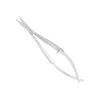 Excelta Scissors - 346B - Micro Self-Opening - Straight - SS - Blade Length .38" - 346B
$35.05
-
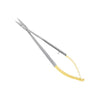 Excelta Scissors - 346-6-HT - Micro Self-Opening - Straight - SS .63" - 346-6-HT
$93.26
-
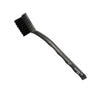 Excelta Brushes - ESD Safe - Offset - Plastic Handle - 197-ESD
$3.50
-
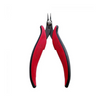 Hakko CHP PN-20-M Thin, Short Nose Pliers - PN-20-M
$12.77$11.49
-
- Gloves
-
Swabs and Applicators
Foam Tipped Swabs
-
ESD & Static Control
ESD & Static Control
- Pipettes
-
Furnaces and Ovens
Furnaces and ovens


Description
- What it is. A Sol-M® 0.5 mL U-100 insulin syringe with half-unit markings, fitted with a 31-gauge, 6 mm (15/64") fixed needle. Half-unit insulin syringes let users measure doses in 0.5-unit steps, which is why they exist: they're built for people who need finer dose control than whole-unit markings allow. It is the only half-unit syringe in the Sol-M standard insulin range.
- Who benefits from half-unit markings. Small or sensitive dosing is common in pediatric diabetes care and for adults who respond strongly to insulin. A half-unit insulin syringe makes doses like 3.5 or 7.5 units readable on the barrel instead of estimated between lines. The 0.5 mL barrel holds up to 50 units, so it also covers moderate doses.
- Fine, short needle. The 31 gauge needle is the thinnest in the Sol-M standard insulin range, and its 6 mm length suits short-needle injection technique. Sol-Millennium specifies tri-bevel, anti-coring needles with silicone-oil lubrication and a thin-wall cannula to help insulin flow and shorten injection time. As a 6mm insulin syringe, it pairs a fine needle with precise markings.
- Packed for daily use. Bold, easy-to-read unit markings, a large flange for a secure grip, and a low dead space design (distributor specification) round out the syringe. Each one is sterile and single-use, with the needle permanently attached. Packing is PE bags of 10, 100 per box, and 1,000 per case. For U-100 insulin only. That combination of markings and a fine needle is uncommon in a single standard syringe.
Recommended For
- Pediatric insulin dosing: half-unit markings support very small dose adjustments
- Insulin-sensitive adults: doses such as 2.5 or 4.5 units can be measured directly
- Careful dose titration: fine increments make step changes easier to follow
- Short-needle technique: 6 mm, 31G needle for subcutaneous injection
- Diabetes clinics and pharmacies: PE bags of 10 for dispensing
Product Details
- Manufacturer: Sol-Millennium Medical, Inc.
- Product Line: Sol-M® Standard Insulin Syringe
- Syringe Volume: 0.5 mL (50 units of U-100 insulin)
- Unit Markings: Half-unit markings
- Needle Gauge: 31G
- Needle Length: 6 mm (15/64")
- Needle Attachment: Fixed (permanently attached) needle
- Needle Design: Tri-bevel, anti-coring, silicone-oil lubricated; thin-wall cannula
- Markings: Bold, easy-to-read U-100 insulin unit markings
- Flange: Large flange for a secure grip
- Dead Space: Low dead space (distributor specification)
- Syringe / Needle Material: Polypropylene syringe; stainless steel needle (distributor specification)
- Insulin Compatibility: U-100 insulin only
- Sterility: Sterile
- Use: Single use
- Packaging: PE bag of 10; 100 per box; 1,000 per case
FAQs
How do I read a half-unit marking correctly?
Hold the syringe at eye level and line up the top edge of the black plunger stopper, the edge nearest the needle, with the target mark. Half-unit lines sit between the whole-unit lines. Practicing with your care team the first few times helps make readings consistent from dose to dose.
Is a half-unit syringe only for children?
No. Children use them often because their doses are small, but adults who are very sensitive to insulin or are fine-tuning doses with their clinician also use half-unit syringes. The deciding factor is whether your prescribed doses include half units, not age. Ask your care team whether half-unit dosing is right for you.
Can I use this syringe for doses above 50 units?
No. The 0.5 mL barrel holds a maximum of 50 units of U-100 insulin. For larger doses, use a 1 mL syringe or two separate injections, as your clinician directs. For doses that never need half units, a standard 0.5 mL or 1 mL syringe may be simpler to read.
Does a 6 mm needle reach far enough?
For most adults and children, current injection guidance considers short needles sufficient to reach subcutaneous tissue while lowering the risk of injecting into muscle. Technique still matters: follow your care team's instructions on injection angle, whether to pinch the skin, and site rotation. Rotate sites to keep absorption consistent.
What should I do if a dose is between half-unit lines?
Prescribed doses should match the markings on the syringe. If your dose falls between lines, do not estimate. Contact your prescriber or pharmacist to confirm the intended dose, since insulin rounding errors can cause high or low blood sugar. Never round an insulin dose on your own.
RELATED PRODUCTS


