- No products in the cart.

- PPE Apparel
- Chemicals
- Wipes
-
Hand Tools
Hand Tools
-
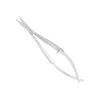 Excelta Scissors - 346B - Micro Self-Opening - Straight - SS - Blade Length .38" - 346B
$35.05
-
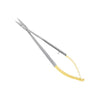 Excelta Scissors - 346-6-HT - Micro Self-Opening - Straight - SS .63" - 346-6-HT
$93.26
-
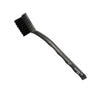 Excelta Brushes - ESD Safe - Offset - Plastic Handle - 197-ESD
$3.50
-
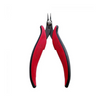 Hakko CHP PN-20-M Thin, Short Nose Pliers - PN-20-M
$12.77$11.49
-
- Gloves
-
Swabs and Applicators
Foam Tipped Swabs
-
ESD & Static Control
ESD & Static Control
- Pipettes
-
Furnaces and Ovens
Furnaces and ovens


Description
- What it is. This mannitol is USP grade D-mannitol, a white crystalline sugar alcohol supplied in a 1 lb size. It is used as a laboratory reagent, a bulking agent in freeze-drying, a carbon source in microbiology media, and an excipient in formulation work.
- What USP grade means. USP grade material meets the United States Pharmacopeia monograph for mannitol. The monograph sets a melting range of 164 to 169 °C, a specific rotation of +137 to +145 degrees under the USP method, a loss on drying of no more than 0.3%, and a test for reducing sugars.
- Chemical identity. D-mannitol (CAS 69-65-8, C6H14O6, 182.17 g/mol) is a six-carbon sugar alcohol and an isomer of sorbitol. It has a density of about 1.49 g/cm³ and dissolves in water to about 156 g per liter at 18 °C.
- Non-hygroscopic and stable. Unlike sorbitol, mannitol absorbs little moisture from the air. That stability is why it is widely used as a tablet diluent and as a bulking agent that gives freeze-dried products a firm, elegant cake.
- Microbiology. Mannitol is the fermentable carbohydrate in mannitol salt agar, where organisms that ferment it, such as Staphylococcus aureus, produce acid that changes the medium's phenol red indicator to yellow.
- Analytical chemistry. Mannitol is also used in the laboratory to complex boric acid, which turns the weak acid into a stronger acid that can be titrated sharply with sodium hydroxide.
- Not for clinical use. This product is supplied for laboratory and manufacturing use. Mannitol injections used in medicine are separate, sterile products made under drug manufacturing controls.
- Preparing solutions. Mannitol dissolves readily in warm water. For concentrated solutions, warm gently with stirring and allow the solution to cool, watching for crystallization at high concentrations, since mannitol solubility falls as temperature drops.
- Handling at a glance. Mannitol has low toxicity and is not generally classified as hazardous. Avoid creating dust, wear safety glasses and gloves as standard practice, and keep the container closed in a dry place.
Technical Specifications
| Chemical Name | D-Mannitol |
| CAS Number | 69-65-8 |
| EC Number | 200-711-8 |
| Synonyms | Mannitol, mannite, (2R,3R,4R,5R)-hexane-1,2,3,4,5,6-hexol |
| Formula | C6H14O6 |
| Molecular Weight | 182.17 g/mol |
| Grade | USP |
| Melting Range (USP) | 164 to 169 °C |
| Specific Rotation (USP method) | +137 to +145 degrees |
| Loss on Drying (USP) | 0.3% max (105 °C, 4 hours) |
| Reducing Sugars | Meets USP test |
| Density | About 1.49 g/cm³ |
| Water Solubility | About 156 g/L (18 °C) |
| Appearance | White crystalline powder |
| Hazard Profile | Not classified as hazardous (confirm on SDS) |
| Package Size | 1 lb |
Applications / Common Uses
- Freeze-drying: Serves as a bulking agent for lyophilized formulations.
- Microbiology media: Provides fermentable carbohydrate in mannitol salt agar.
- Boric acid titration: Complexes boric acid for sharp titration.
- Formulation work: Acts as a non-hygroscopic diluent.
- Teaching labs: Demonstrates sugar alcohol chemistry.
Storage, Handling & Shipping
Store tightly closed in a cool, dry place at room temperature, away from strong oxidizers. Mannitol is stable and absorbs little moisture, but keeping it sealed preserves its USP quality.
- Incompatible materials: Strong oxidizers.
- Personal protection: Safety glasses, gloves, and dust control.
- Spill response: Sweep up without raising dust and place in a closed container.
- First aid: Eyes: rinse with water if irritation occurs.
Related Categories & Services
- Shop Organic Compounds for related products in this category.
- Explore General Chemistry and ACS Grade Laboratory Chemicals.
- Vendor Managed Inventory (VMI) Program: Lab Pro can stock, track, and replenish this item on site so it never runs out. Contact info@labproinc.com or 888-452-2776 to set up a VMI assessment.
Related Articles
FAQs
What does USP grade mean for mannitol?
USP grade mannitol meets the United States Pharmacopeia monograph, which includes a melting range of 164 to 169 °C, a specific rotation of +137 to +145 degrees, a loss on drying of no more than 0.3%, and a reducing sugar test. It suits formulation and regulated lab work.
What is mannitol used for in the lab?
It is used as a bulking agent in freeze-drying, a fermentable carbohydrate in microbiology media such as mannitol salt agar, a non-hygroscopic diluent in formulation work, and a complexing agent that allows boric acid to be titrated sharply with sodium hydroxide. It is a versatile reagent.
How is mannitol different from sorbitol?
Mannitol and sorbitol are isomers with the same formula. Mannitol absorbs little moisture and is less soluble in water, while sorbitol is hygroscopic and highly soluble. Those differences make mannitol the preferred choice for dry tablets and freeze-dried cakes. Both are sugar alcohols used widely in formulations, but they are not interchangeable in dry products.
Why is mannitol used in freeze-drying?
Mannitol crystallizes during freezing and forms a firm, porous cake that supports the dried product and dissolves quickly when reconstituted. Its low moisture uptake also helps the dried product remain stable during storage. Typical formulations combine mannitol with other excipients, and the freezing protocol controls how completely it crystallizes during processing.
Can this mannitol be used for injection?
No. This product is supplied for laboratory and manufacturing use. Medical mannitol injections are separate sterile products made and tested under drug manufacturing controls. Use this material for research, formulation development, media, and analytical work. Label stock clearly so laboratory material stays separate from any clinical supplies in shared areas.
RELATED PRODUCTS


