- No products in the cart.

- PPE Apparel
- Chemicals
- Wipes
-
Hand Tools
Hand Tools
-
 Excelta Scissors - 346B - Micro Self-Opening - Straight - SS - Blade Length .38" - 346B
$35.05
-
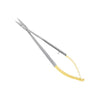 Excelta Scissors - 346-6-HT - Micro Self-Opening - Straight - SS .63" - 346-6-HT
$93.26
-
 Excelta Brushes - ESD Safe - Offset - Plastic Handle - 197-ESD
$3.50
-
 Hakko CHP PN-20-M Thin, Short Nose Pliers - PN-20-M
$12.77$11.49
-
- Gloves
-
Swabs and Applicators
Foam Tipped Swabs
-
ESD & Static Control
ESD & Static Control
- Pipettes
-
Furnaces and Ovens
Furnaces and ovens


Sodium Thiosulfate 0.1 N Solution, 1 Gallon
$53.26
Description
- What it is. This sodium thiosulfate solution is a 0.1 N (0.1 M) volumetric titrant, supplied in a 1 gallon size. It is the standard reductant for iodometric titrations, used to measure iodine released by oxidizing analytes.
- How iodometry works. In iodometric methods, an oxidizing analyte reacts with excess potassium iodide to release iodine, which is then titrated with thiosulfate: 2 S2O3²⁻ + I2 → S4O6²⁻ + 2 I⁻. Starch indicator, added near the endpoint, turns blue-black with iodine and goes colorless when all iodine is consumed.
- Molar equals normal. Each thiosulfate ion gives up one electron in this reaction, so for iodometry its normality equals its molarity, and its equivalent weight equals its formula weight.
- Standardization. Standardize thiosulfate against primary standards that release a known amount of iodine from iodide, such as potassium iodate or potassium dichromate. Restandardize periodically, since thiosulfate solutions slowly change strength.
- Stability. Thiosulfate solutions decompose slowly due to bacterial action, light, and acidity, which can deposit sulfur and reduce strength. Clean storage and occasional restandardization keep results reliable.
- Dissolved oxygen by Winkler. In the Winkler method, dissolved oxygen oxidizes manganese(II) to a higher oxidation state in alkaline solution. Upon acidification with iodide, an equivalent amount of iodine is released and titrated with thiosulfate, yielding dissolved oxygen in mg/L.
- What each milliliter titrates. One milliliter of 0.1 N thiosulfate reacts with 0.1 milliequivalent, equal to 12.69 mg of iodine, 3.545 mg of chlorine as Cl2, or 0.800 mg of dissolved oxygen (calculated from equivalent weights).
- Calculating results. Analyte mass equals the titrant volume multiplied by the standardized normality and by the analyte's milliequivalent weight. For available chlorine as Cl2, that weight is 35.45 mg per milliequivalent; for dissolved oxygen, 8.00 mg.
- Common determinations. Thiosulfate titrations measure residual chlorine and available chlorine in bleach, dissolved oxygen by the Winkler method, peroxide value of fats and oils, copper in alloys, and many other oxidants. Pair it with Lab Pro's Potassium Iodide 10% (w/v) Solution, 1 Quart, and Starch Indicator Solution 1%, 1 Gallon.
- Where it is used. Laboratories use 0.1 N sodium thiosulfate in water and wastewater testing, food analysis, bleach and disinfectant QC, metal assays, and teaching labs demonstrating iodometric titration. The 1 gallon size supports daily testing.
Technical Specifications
| Chemical Name | Sodium thiosulfate, aqueous volumetric solution |
| CAS Numbers | 10102-17-7 (sodium thiosulfate pentahydrate) or 7772-98-7 (anhydrous), per SDS; 7732-18-5 (water) |
| Synonyms | Sodium hyposulfite, hypo |
| Formula (active) | Na2S2O3 (pentahydrate Na2S2O3·5H2O) |
| Formula Weight | 248.18 g/mol (pentahydrate); 158.11 g/mol (anhydrous) |
| Equivalent Weight | Formula weight (molar = normal in iodometry) |
| Concentration | 0.1 N (0.1 M) |
| Content | About 24.82 g/L as pentahydrate (calculated) |
| Titration Equivalence | 1.00 mL = 12.69 mg I2; 3.545 mg Cl2; 0.800 mg O2 (calculated) |
| Indicator | Starch, added near endpoint |
| Primary Standards | Potassium iodate; potassium dichromate |
| Appearance | Clear, colorless liquid |
| Stability Note | Protect from light, acid, and microbial contamination |
| Package Size | 1 gallon |
Applications / Common Uses
- Residual chlorine: Titrates iodine released by chlorine.
- Dissolved oxygen: Completes the Winkler titration.
- Peroxide value: Measures peroxides in fats and oils.
- Bleach assay: Determines available chlorine.
- Copper assays: Titrates iodine released by copper(II).
Storage, Handling & Shipping
Store tightly closed at room temperature, protected from light, acids, and oxidizers. Thiosulfate solutions slowly decompose through bacterial action and in acidic conditions, depositing sulfur, so keep them clean, avoid contamination, and re-standardize periodically.
- Incompatible materials: Acids (release sulfur dioxide and sulfur), strong oxidizers, and iodine.
- Personal protection: Safety glasses and gloves.
- Spill response: Wipe up and rinse the area with water.
- First aid: Eyes: rinse with water for several minutes.
Related Categories & Services
- Shop Buffers, Standards & Solutions for related products in this category.
- Explore Inorganic Chemicals and ACS Grade Laboratory Chemicals.
- Vendor Managed Inventory (VMI) Program: Lab Pro can stock, track, and replenish this item on site so it never runs out. Contact info@labproinc.com or 888-452-2776 to set up a VMI assessment.
Related Articles
FAQs
What is 0.1 N sodium thiosulfate used for?
It is the titrant in iodometric methods, where an oxidant releases iodine from potassium iodide, and thiosulfate titrates the iodine. Uses include residual chlorine, dissolved oxygen (Winkler method), peroxide value of oils, bleach strength, and copper determinations in water, food, and QC labs.
When should I add starch indicator?
Add starch near the endpoint, when the iodine color has faded to pale yellow. Adding starch too early, while iodine is concentrated, can trap iodine in the starch complex and slow its release, making the endpoint less sharp and the result less accurate. Swirl well after adding it.
How is sodium thiosulfate standardized?
Dissolve a weighed amount of primary standard potassium iodate in water, add excess potassium iodide and acid to release a known amount of iodine, then titrate with the thiosulfate using starch near the endpoint. Calculate normality from the mass of iodate and volume used. Repeat in triplicate.
Why does thiosulfate solution lose strength?
Bacteria, light, and acidity slowly decompose thiosulfate, sometimes depositing fine sulfur that turns the solution cloudy. Store it in the dark, keep it free of contamination, and restandardize periodically. Discard solution that becomes cloudy or shows sulfur deposits. Sometimes add a small amount of sodium carbonate to stabilize prepared solutions.
How much chlorine does 1 mL of 0.1 N thiosulfate measure?
One milliliter of 0.1 N sodium thiosulfate corresponds to 3.545 mg of chlorine as Cl2, since each chlorine molecule releases one molecule of iodine from iodide. Multiply by the titrant volume, then divide by the sample volume (in liters) to report mg/L. Subtract any reagent blank first.
RELATED PRODUCTS


