- No products in the cart.

- PPE Apparel
- Chemicals
- Wipes
-
Hand Tools
Hand Tools
-
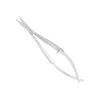 Excelta Scissors - 346B - Micro Self-Opening - Straight - SS - Blade Length .38" - 346B
$35.05
-
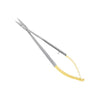 Excelta Scissors - 346-6-HT - Micro Self-Opening - Straight - SS .63" - 346-6-HT
$93.26
-
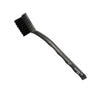 Excelta Brushes - ESD Safe - Offset - Plastic Handle - 197-ESD
$3.50
-
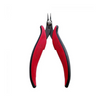 Hakko CHP PN-20-M Thin, Short Nose Pliers - PN-20-M
$12.77$11.49
-
- Gloves
-
Swabs and Applicators
Foam Tipped Swabs
-
ESD & Static Control
ESD & Static Control
- Pipettes
-
Furnaces and Ovens
Furnaces and ovens


Previous product

Back to products
Back to products

Hydrochloric Acid 37%, ACS Grade
$45.00 – $1,500.00
Next product


Potassium Hydroxide 30% (w/v) Solution
$131.25 – $2,095.00
Methyl Orange Indicator, 0.1% (w/v) Aqueous, 500 mL
$21.50
Description
- What it is. This methyl orange indicator is a 0.1% (w/v) aqueous solution of methyl orange, supplied in a 500 mL size. It is a ready-to-use acid-base indicator for titrations whose endpoints fall in the acidic range.
- How the color change works. Methyl orange is red below about pH 3.1 and yellow above about pH 4.4, passing through orange in between. With a pKa of about 3.47, it changes color in the range where strong acids neutralize weak bases.
- Chemical identity. Methyl orange is the sodium salt of 4-[4-(dimethylamino)phenylazo]benzenesulfonic acid (CAS 547-58-0, C14H14N3NaO3S, 327.33 g/mol), an azo dye. In acid, protonation shifts its light absorption, producing the red form.
- Where its endpoint is useful. Because it changes color between pH 3.1 and 4.4, methyl orange suits titrations of weak bases, such as ammonia or carbonate, with strong acids. It is a classic indicator for total alkalinity and for titrating sodium carbonate with hydrochloric acid.
- Total alkalinity. In water analysis, alkalinity titrated to the methyl orange endpoint (near pH 4.5) represents total alkalinity: hydroxide, carbonate, and bicarbonate combined. Phenolphthalein, by contrast, marks the higher pH endpoint near 8.3.
- Two-endpoint alkalinity. In a full alkalinity analysis, analysts first titrate the sample to the phenolphthalein endpoint near pH 8.3, then continue to the methyl orange endpoint near pH 4.5. The two volumes let analysts calculate hydroxide, carbonate, and bicarbonate separately.
- Reading the endpoint. The orange transition can be hard to judge in dilute or colored samples. For a sharper endpoint, many labs use modified methyl orange, which adds a blue dye to give a gray endpoint; see Lab Pro's Modified Methyl Orange Indicator #2.
- Using the indicator. Add two or three drops per titration, titrate to the color change, and use the same number of drops for blanks and standards. Pair it with a standard acid such as Lab Pro's Hydrochloric Acid 0.1 N (0.1 M), 1 Gallon.
- Where it is used. Methyl orange is used in water and wastewater alkalinity testing, acid-base titrations in teaching and QC labs, carbonate and ammonia determinations, and demonstrations of pH indicator chemistry.
Technical Specifications
| Chemical Name | Methyl orange, aqueous indicator solution |
| CAS Numbers | 547-58-0 (methyl orange, sodium salt); 7732-18-5 (water) |
| Synonyms | Orange III, helianthin, sodium 4-[4-(dimethylamino)phenylazo]benzenesulfonate |
| Formula (dye) | C14H14N3NaO3S |
| Molecular Weight (dye) | 327.33 g/mol |
| Concentration | 0.1% (w/v) |
| Transition Range | pH 3.1 (red) to 4.4 (yellow) |
| pKa | About 3.47 (25 °C) |
| Typical Endpoint | Near pH 4.5 (total alkalinity) |
| Appearance | Orange liquid |
| Physical State | Liquid, aqueous solution |
| Typical Dose | 2 to 3 drops per titration |
| Hazard Profile | Low at indicator strength; dye is mutagenic as a solid (confirm on SDS) |
| Package Size | 500 mL |
Applications / Common Uses
- Total alkalinity: Marks the total alkalinity endpoint near pH 4.5.
- Carbonate titration: Indicates sodium carbonate titrations with strong acid.
- Ammonia determination: Signals weak-base titration endpoints.
- Teaching labs: Demonstrates acid-base indicator behavior.
- QC titrations: Supports routine acid-base assays.
Storage, Handling & Shipping
Store tightly closed at room temperature, protected from light and away from strong oxidizers and strong acids. Dispense small amounts into a clean container for use, and never return used indicator to stock.
- Incompatible materials: Strong oxidizers and strong acids.
- Personal protection: Safety glasses and gloves; the dye stains skin and surfaces.
- Spill response: Wipe up with absorbent material and rinse the area with water.
- First aid: Eyes: rinse with water for several minutes. Skin: wash with soap and water.
Related Categories & Services
- Shop Buffers, Standards & Solutions for related products in this category.
- Explore PH Buffers & Test Kits and General Chemistry.
- Vendor Managed Inventory (VMI) Program: Lab Pro can stock, track, and replenish this item on site so it never runs out. Contact info@labproinc.com or 888-452-2776 to set up a VMI assessment.
Related Articles
FAQs
What color change does methyl orange show?
Methyl orange is red below about pH 3.1, yellow above about pH 4.4, and orange in between. This transition range in acidic solution makes it suitable for titrating weak bases with strong acids, such as carbonate or ammonia with hydrochloric acid. Judge the endpoint against a white background.
Why is methyl orange used for total alkalinity?
Total alkalinity is measured by titrating to a pH near 4.5, where hydroxide, carbonate, and bicarbonate have all been neutralized. Methyl orange changes color in that range, so it marks the total alkalinity endpoint, while phenolphthalein marks the higher pH 8.3 endpoint. Many labs run both endpoints on one sample.
What is the difference between methyl orange and modified methyl orange?
Modified methyl orange adds xylene cyanol, a blue dye, to methyl orange. The combination shows a gray endpoint between green and mauve, which is easier to see than the gradual orange change, especially in dilute or slightly colored samples. Both work in the same pH region.
How many drops of methyl orange should I use?
Use two or three drops per titration, and keep the amount consistent between samples, standards, and blanks. Too much indicator can blur the endpoint and consume a small amount of titrant, which affects results at low concentrations. Record the indicator amount in your method so results stay comparable over time and between analysts.
Can methyl orange be used for strong acid and strong base titrations?
Yes, because the steep pH change at the equivalence point of a strong acid and strong base passes through methyl orange's range. However, phenolphthalein or bromothymol blue are often preferred there, since their endpoints sit closer to neutral. Choose the indicator your method specifies so results stay comparable.
RELATED PRODUCTS


