- No products in the cart.

- PPE Apparel
- Chemicals
- Wipes
-
Hand Tools
Hand Tools
-
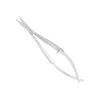 Excelta Scissors - 346B - Micro Self-Opening - Straight - SS - Blade Length .38" - 346B
$35.05
-
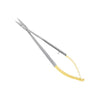 Excelta Scissors - 346-6-HT - Micro Self-Opening - Straight - SS .63" - 346-6-HT
$93.26
-
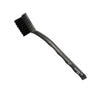 Excelta Brushes - ESD Safe - Offset - Plastic Handle - 197-ESD
$3.50
-
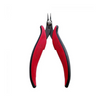 Hakko CHP PN-20-M Thin, Short Nose Pliers - PN-20-M
$12.77$11.49
-
- Gloves
-
Swabs and Applicators
Foam Tipped Swabs
-
ESD & Static Control
ESD & Static Control
- Pipettes
-
Furnaces and Ovens
Furnaces and ovens


Sodium Chloride, ACS Reagent Grade, Crystal, 2.5 kg
$120.00
Description
- What it is. This sodium chloride is ACS reagent-grade white crystals, supplied in a 2.5 kg size. It is a high-purity salt used to prepare standards, buffers, saline solutions, and electrolytes in analytical and life science labs.
- What ACS grade guarantees. ACS reagent sodium chloride assays at a minimum of 99.0% by argentometric titration, with limits on insoluble matter, iodide, bromide, chlorate and nitrate, phosphate, sulfate, heavy metals (5 ppm), iron (2 ppm), calcium, magnesium, and potassium. A 5% solution has a pH of 5.0-9.0.
- Chemical identity. Sodium chloride (CAS 7647-14-5, NaCl, 58.44 g/mol) melts at about 801 °C, boils at about 1413 °C, and has a density of about 2.16 g/cm³. It dissolves in water to about 358 g/L.
- A chloride primary standard. Use dried ACS sodium chloride to standardize silver nitrate and mercuric nitrate titrants, since its chloride content is precisely known. Dry the salt at an elevated temperature before weighing for standardization.
- Biology and buffers. Sodium chloride sets ionic strength in buffers such as phosphate-buffered saline and Tris-buffered saline, and it is used to prepare normal saline, salting-out solutions for protein precipitation, and DNA extraction buffers.
- Analytical uses. Labs use ACS sodium chloride to prepare conductivity and chloride standards, ionic strength adjusters, eluents for ion-exchange chromatography, and saturated solutions for humidity control.
- Saturated solutions. A saturated sodium chloride solution maintains a relative humidity of about 75% in a closed space, so it is used to calibrate humidity sensors and condition samples. Keep excess undissolved crystals present so the solution stays saturated.
- Size for regular use. The 2.5 kg size supports labs that routinely prepare buffers and saline, providing one consistent lot over an extended period.
- Drying before use as a standard. For standardization, dry sodium chloride at an elevated temperature for several hours, cool in a desiccator, and weigh promptly. Dried salt has a precisely known chloride content, which makes standard titrant calculations reliable.
- Related products. For ready-made saline, see Lab Pro's Saline Solution 0.9% (w/v) NaCl (1 Gallon, Case of 4 Gallons). For chloride titrations, see Silver Nitrate 0.1 N Solution (1 Quart, 1 Gallon).
Technical Specifications
| Chemical Name | Sodium chloride |
| CAS Number | 7647-14-5 |
| EC Number | 231-598-3 |
| Synonyms | Halite, rock salt (mineral), NaCl |
| Formula | NaCl |
| Molecular Weight | 58.44 g/mol |
| Grade | ACS reagent |
| Assay (argentometric) | 99.0% min |
| pH (5% solution, 25 °C) | 5.0 to 9.0 |
| Insoluble Matter | 0.005% max |
| Iodide (I) | 0.002% max |
| Bromide (Br) | 0.01% max |
| Chlorate and Nitrate (as NO3) | 0.003% max |
| Phosphate (PO4) | 5 ppm max |
| Sulfate (SO4) | 0.004% max |
| Barium (Ba) | Passes test |
| Heavy Metals (as Pb) | 5 ppm max |
| Iron (Fe) | 2 ppm max |
| Calcium (Ca) | 0.002% max |
| Magnesium (Mg) | 0.001% max |
| Potassium (K) | 0.005% max |
| Melting Point | About 801 °C |
| Density | About 2.16 g/cm³ |
| Form | White crystals |
| Package Size | 2.5 kg |
Applications / Common Uses
- Chloride standardization: Standardizes silver nitrate and mercuric nitrate.
- Buffer preparation: Sets ionic strength in PBS and TBS.
- Saline solutions: Prepares normal and other saline concentrations.
- Protein salting out: Precipitates proteins at high concentration.
- Conductivity standards: Prepares chloride and conductivity standards.
Storage, Handling & Shipping
Store tightly closed in a dry place at room temperature. Sodium chloride is stable but can cake in humid conditions, so keep the container sealed and dry the salt before using it as a primary standard.
- Incompatible materials: Strong oxidizers and strong acids.
- Personal protection: Safety glasses and gloves.
- Spill response: Sweep up and dispose of according to local regulations.
- First aid: Eyes: rinse with water for several minutes.
Related Categories & Services
- Shop ACS Grade Laboratory Chemicals for related products in this category.
- Explore Inorganic Chemicals and Buffers, Standards & Solutions.
- Vendor Managed Inventory (VMI) Program: Lab Pro can stock, track, and replenish this item on site so it never runs out. Contact info@labproinc.com or 888-452-2776 to set up a VMI assessment.
Related Articles
FAQs
What does ACS grade mean for sodium chloride?
ACS grade sodium chloride meets American Chemical Society requirements: at least 99.0% assay by argentometric titration, a 5% solution pH of 5.0 to 9.0, and strict limits on impurities such as iodide, bromide, sulfate, heavy metals, and iron. It suits analytical and biological work. Lot certificates list actual results.
Can I use ACS sodium chloride as a primary standard?
Yes. Dry it at an elevated temperature to remove moisture, cool it in a desiccator, and weigh accurately. Its chloride content is then known precisely, making it suitable for standardizing silver nitrate and mercuric nitrate titrants used in chloride determinations. Record the drying conditions and the mass used so you can trace and repeat the standardization results.
How do I make 0.9% saline from sodium chloride?
Dissolve 9.0 g of sodium chloride in deionized water and dilute to 1 liter. For applications that require sterility, sterilize the solution by autoclaving or filtration and handle it aseptically. Label it with the concentration and preparation date. Use deionized water for best purity. Mix until dissolved.
Why does sodium chloride cake?
Sodium chloride absorbs small amounts of moisture in humid conditions, which causes crystals to bond together. Caking does not change its chemistry, but absorbed water affects weighing accuracy. Keep the container sealed and dry the salt before precise work. Break up lumps gently before weighing.
Is sodium chloride hazardous?
Sodium chloride is not classified as hazardous under normal laboratory use. Large amounts of dust may irritate the eyes. Wear safety glasses and gloves as standard practice, and review the safety data sheet for this product before use. In case of eye contact, rinse with water for several minutes.
RELATED PRODUCTS


